Jaehaera Targaryen
Fire & BloodJaehaera Targaryen was the daughter of Aegon II Targaryen and Helaena Targaryen, a child whose short life carried the dynastic hopes of one branch of House Targaryen through the civil war and into its aftermath. Born a twin, separated from her family during the conflict, and married to Aegon III in a public attempt to reunite the rival branches, she became queen while still a child. The marriage could symbolize reconciliation, but it did not restore what war had taken from either bride or groom: Jaehaera remained lonely and withdrawn, and died at ten after falling from a window in Maegor’s Holdfast.
Family and Childhood
Jaehaera was born in 123 AC, the daughter of Aegon the Elder and his sister Helaena. Their marriage followed the ancient Targaryen custom of marrying within the family. At fourteen, Helaena gave birth to twins, Jaehaera and her brother Jaehaerys. A dragon’s egg was placed in each infant’s cradle, and both eggs hatched. The children did not conform to the court’s expectations of healthy Targaryen heirs: Jaehaera was tiny and slow to grow, did not cry or smile, and was described as doing none of the things a baby was expected to do. Jaehaerys was larger, but had six fingers on his left hand and six toes on each foot.
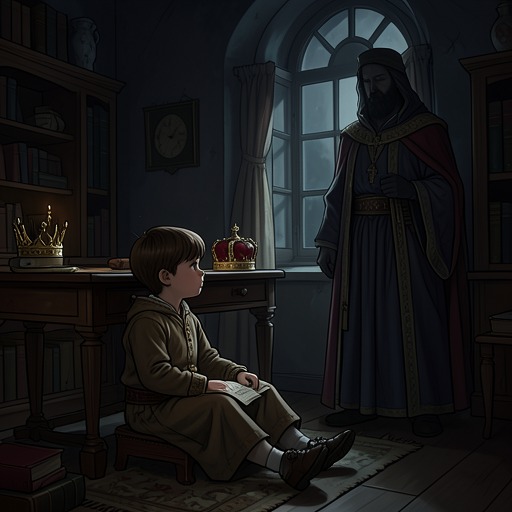
By the time Jaehaera was six, she had a younger brother, Maelor, who was two. On the third day of the third moon of 129 AC, Helaena brought all three children to visit Viserys I in his chambers. The king gave Maelor a pearl ring to play with and told the twins a familiar story about their namesake, Jaehaerys, flying north to defeat wildlings, giants, and wargs. The children listened attentively, though they had heard the tale many times. Viserys sent them away, pleading weariness and tightness in his chest; he then closed his eyes and died. The domestic scene, with its small gift and well-worn story, stands immediately before the succession crisis that would engulf the family.
Flight and Separation During the War
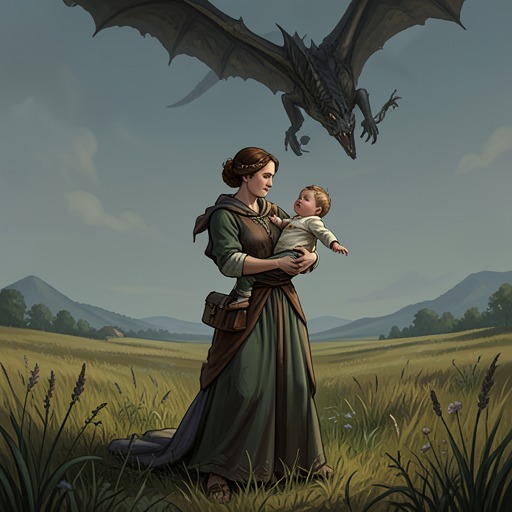
The civil war brought violence into Jaehaera’s family and home. Blood and Cheese entered Helaena’s apartments while the queen was with her children. The account later identifies Jaehaerys as having been murdered by them, a loss that remained central to Jaehaera’s childhood. When Rhaenyra’s men took control of King’s Landing, they found Helaena locked in her bedchamber, but Aegon II, Jaehaera, and Maelor had fled with the Kingsguard Willis Fell and Rickard Thorne. Their disappearance prompted a search: rewards were offered for information, and hunting parties were sent after the fugitives and anyone suspected of helping them.
Larys Strong arranged for the party to split up so that the capture of one fugitive would not expose the others. Rickard Thorne was assigned to take Maelor to Lord Hightower, while Willis Fell was to escort Jaehaera to Storm’s End. Each guard was kept ignorant of the other’s destination. Jaehaera, described as a sweet and simple girl of six, was thus separated from her younger brother as well as from her parents. At Storm’s End, Alicent Hightower received word that her granddaughter had arrived safely and wept with relief. The reunion offered safety, but it did not undo the losses and separations that had marked Jaehaera’s flight.
Queen and Dynastic Reconciliation
After Aegon II’s death, Jaehaera became central to negotiations over how the realm might be joined again. Corlys Velaryon sought pardons for those who had fought for Rhaenyra, the release of Lady Baela, and a marriage between Jaehaera and Aegon the Younger. He argued that the realm had been split apart and needed to be joined again. Alicent, acting for her son, granted Corlys a royal pardon and restored him to the small council; the agreement also set the course for the marriage.
On the seventh day of the seventh moon of 131 AC, the High Septon of Oldtown married Jaehaera to Aegon the Younger, eldest son of Rhaenyra and Daemon. Jaehaera was the daughter of Helaena by Aegon II; her bridegroom belonged to the rival branch descended from Rhaenyra. Their wedding was therefore more than a family alliance: it publicly joined the two lines that had fought over the Iron Throne and was presented as ending two years of treachery and carnage. With the Dragonpit still largely in ruins, the ceremony took place outdoors atop Visenya’s Hill. The High Septon performed the rites before grandstands filled with nobles, while tens of thousands of smallfolk cheered the couple as they were carried in an open litter to the Red Keep. Aegon was crowned king, and Jaehaera became queen.
The spectacle of unity contrasted with the children’s private lives. Aegon was eleven and Jaehaera eight at their wedding. They had little contact except on formal occasions, which were themselves rare, and Jaehaera was reluctant to leave her chambers. Grand Maester Munkun described both children as broken: Jaehaera had witnessed her twin brother’s murder, while Aegon had lost all four of his brothers and seen his uncle kill his mother. Munkun’s account emphasizes their shared damage rather than suggesting that the marriage healed it. Their union made a powerful dynastic statement, but the young king and queen had little joy and little companionship to offer one another.
Death and Uncertainty
Alicent’s relationship with the child queen was also troubled. After the murder of her last son, the Dowager Queen could not be trusted to take part in court life as before. She cursed the king and was considered dangerous around Jaehaera: during a meal with the child, Alicent told her to cut her husband’s throat while he slept, frightening Jaehaera into screaming. Ser Tyland confined Alicent to her apartments in Maegor’s Holdfast. The episode shows the marriage surrounded not by a restored family but by grief, suspicion, and the continuing consequences of the war.
On the twenty-second day of the ninth moon of 133 AC, Jaehaera died at ten. She fell from a window in Maegor’s Holdfast, and the account presents her death as a suicide, while distinguishing that conclusion from rumors and suspicions circulating at court. Jaehaera had seemed content in her rooms with her maids and ladies, kittens, and dolls, though she was lonely, prone to weeping, and described as somewhat simpleminded. Several explanations were proposed for why she might have leapt: distress over Lady Rhaena’s miscarriage, jealousy of Lady Baela’s pregnancy, or despair because Aegon showed her no affection and did not share her rooms. The narrative rejects these conjectures as explanations supported by hindsight, and states that there is no proof she was murdered. It names Unwin Peake as the only plausible culprit if murder did occur, but leaves that possibility unproven.
Jaehaera’s story closes the gap between political settlement and personal loss. Her marriage gave the realm a visible image of the Targaryen branches reunited, and the public ceremony made that hope legible to nobles and smallfolk alike. Yet the child chosen to embody reconciliation had survived bereavement, flight, and isolation, while her marriage offered little intimacy. Her death, amid competing explanations that the account cannot establish, leaves the political union intact in form but exposes how little a dynastic symbol could repair in the lives of those made to carry it.